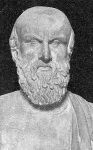
Dramatist, first great Greek tragedian. He expressed a tragic sense of life, which in modern terms may be equated with romanticism, and an appreciation of the truth as perceived through our emotions.
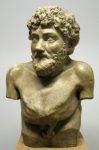
Storyteller. His fable "The Tortoise and The Hare" taught that modesty, patience, hard-work, and perseverance will outlast the contrary qualities and ultimately triumph. Other fables taught similar lessons.
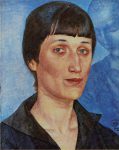
Poet. Her apartment in Leningrad (St. Petersburg) represented a beacon of culture in the midst of the harshest and most barbaric conditions, and she courageously criticized Stalin.
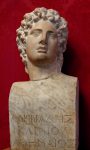
Statesman and general. His name became synonymous with ancient Greek ideals of male beauty. But in his military career, he betrayed his city, Athens, and was eventually assassinated.

Poet. He celebrated both physical love and wine.
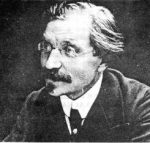
Writer. He wrote the musical "Fiddler on the Roof" and helped preserve Yiddish culture.
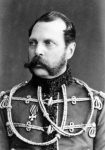
Czar. He freed the serfs in 1861 but was later assassinated.
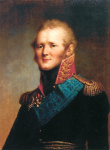
Czar from 1801. He began his reign with ideas of liberalizing the Russian political regime. However, he became an example of reaction and despotism mixed with religious mysticism.
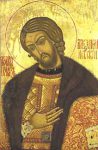
Prince. He exemplified the concept of Holy Russia, which combined Russian nationalism with Orthodox Christianity.
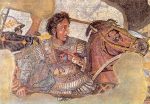
King of Macedonia and conqueror of Persia. Some see in him the spirit of youth, daring, courage, energy, hardihood, curiosity, vision, and the intellectual and artistic heritage of ancient Greece, which he spread widely, together with a tolerance and appreciation of other cultures.
Others see drunkenness, superstition, cruelty, vindictiveness, violence, killing both on and off the battlefield, lack of self-control, despotism, and the age-old gods of power, wealth, fame, and glory pursued to the point of madness.
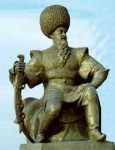
Seljuk (Turkish) leader, devout Muslim, and brilliant military strategist. He wore a burial shroud under his armor when he met a larger Byzantine army at Manzikert in 1071. But he won and secured what became Turkey for Islam.
Philosopher. He was the father of Neoplatonic philosophy, a form of philosophical mysticism, but no written work survives. (See Plotinus, his more famous pupil.)
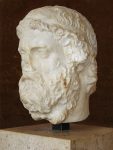
Poet. He was known for his satire and also for his love poetry.
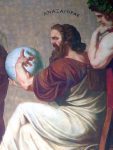
Philosopher. His life expressed the value of scientific or at least pre-scientific curiosity, inquiry, and speculation. He was charged with religious deviance, and was forced into exile from Athens.
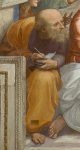
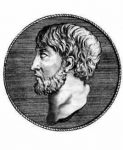
Archaic Greek Pre-Socratic philosopher
Macedonian Regent. Perhaps because he was forty-two years older than the young king, Alexander the Great trusted him sufficiently to name him Regent of Macedonia when he left on his campaign of conquest. His name is associated with loyalty and reliability.
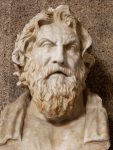
Thinker and pupil of Socrates. He is credited, along with his own pupil Diogenes, with founding the famous Cynic school of Athens. (See Diogenes.)
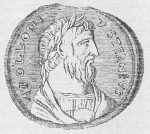
Neo-pythagorean. He was reputed to have worked miracles, came to be worshipped by some devotees, and thus represents magic, mystery, and the hope for miraculous intercession.
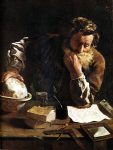
Scientist and engineer. He was a founder of hydrostatics, discoverer of mathematical descriptions of various shapes and figures, and inventor of many practical machines, including defense weapons. His life, work, and personality expressed the sheer joy of investigation, study, discovery, and knowledge. In one story, he leaps from his bath shouting "Eureka (I have found it)" after solving a problem and runs into the street.
