Literary figure and politician. He combined writing and literature with public office.
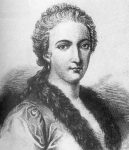
Mathematician, child prodigy, and author of a mathematical textbook. She demonstrated that mathematics was not a male preserve.

Naturalist, artist. He was a devoted student of British insects and birds.
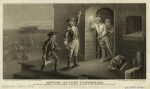
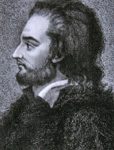
Mennonite. He founded the Amish sect, the strictest branch of the Mennonites, whose members still live simply, wearing black and driving their "horse and buggies," in rural Pennsylvania and other areas of the United States.
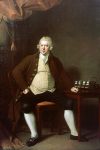
Inventor of mechanical cotton spinning and entrepreneur. His career epitomized the marriage of science, invention, and engineering with entrepreneurship and business acumen. Many people then and since have fiercely rejected the value of this kind of innovation on a variety of grounds, including esthetic, but especially because of a belief that machinery robs people of jobs. The mob that famously ransacked and ruined Arkwright's mill near Chorley raised this cry: that he was destroying jobs. As recently as the 1950's, Eleanor Roosevelt in her newspaper column blamed much of unemployment on the insidious effects of automation. Most economists argue contrariwise today that while automation visibly displaces workers in the short run and in a single place, it rather less visibly creates more jobs in the long run and throughout an economy.
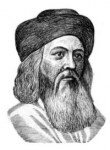
Jewish teacher. Toward the end of his life, he created the Hassidic movement that drew upon the tradition of the Cabala and emphasized a direct, mystical, and enthusiastic communion with God. Initially the concern with spirit seemed to de-emphasize the Law, which did not necessarily sit well with the orthodox. But today, within the context of an often religiously liberal Judaism, Hassidism is considered orthodox in its degree of observance.
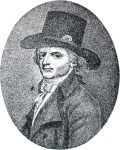
Revolutionary. He was a Jacobin during the French Revolution, but favored an even more radical egalitarian and communist program. When his plot to seize power was uncovered, he was guillotined.
Philosopher. His work Esthetica contributed to the adoption of the term esthetics to connote the philosophical and critical study of beauty.
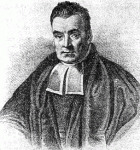
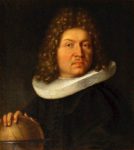
Christian minister and mathematician. He pioneered the use of statistical inference, in which the probability of an event occurring is estimated from the number of previous occurrences. Probability estimates, whether informal and subjective or statistical and objective, are an important valuation tool.
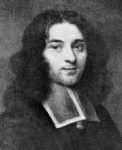
Philosopher. His Dictionairre historique and critique of 1696, which espoused toleration and a skeptical attitude toward philosophical and religious truths, became an early tract of the Enlightenment and influenced Diderot and other contributors to The Encyclopedie.
Dancer, choreographer, and director of the Academie Royale de Danse in France. He helped develop classical ballet (with an early notation system), and thus represented a marriage of intense physical discipline with music and the joy of movement.
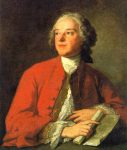
Dramatist. He was a master of satire and farce, and his plays The Barber of Seville and The Marriage of Figaro were adapted for opera by Rossini and Mozart respectively.
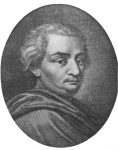
Thinker. His well reasoned opposition to torture and capital punishment made people think. In addition, he pointed out that better childhood conditions and education could reduce crime.
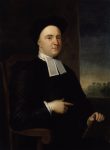
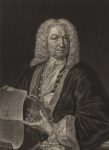
Mathematician
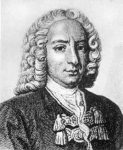
Mathematician. He was a remarkable pioneer in the fields of probability, risk assessment, and human valuation.