
Military leader. He won the Holy Land of Palestine for Islam and also opposed Ali, the founder of the Shiite branch of the religion.
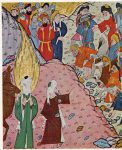
Muslim caliph. He became the first caliph after the prophet's death.
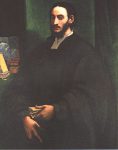
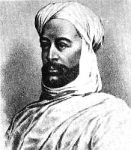
Wife of Mohammed. By supporting her father Abu-Bakr's claim to be the first Caliph and opposing Ali, the prophet's son-in-law, she became identified with the Sunni rather than the Shia branch of Islam.
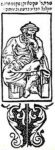
Rabbi and Jewish teacher in Palestine. After the Romans erected a pagan temple in Jerusalem, he joined with Bar Kokhba leading a fiery revolt, but was killed.
Theologian. His Maqalat and other works reaffirmed Islamic doctrines and traditions.
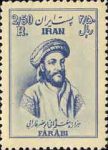
Philosopher, Platonist, and Neoplatonist. He valued both logic and mysticism, and also wrote a utopian political tract (The Perfect City) inspired by Plato's Republic.
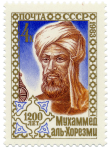
Mathematician. He may be considered the father of modern mathematics in addition to his many other studies. The word algebra derives from the title of one of his books.

Theologian. He helped preserve the work of Aristotle and other ancient thinkers and integrated their style of thought into Islamic theology.
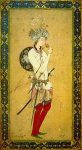
Caliph, fifth of the Abbasids. He presided over the Muslim caliphate at the peak of its powers, cultivated learning and the arts, but could also be a cruel and willful tyrant, as described in The Arabian Nights.
Astrologer, pre-scientist, student and lover of the stars.
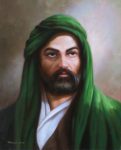
Fourth caliph of Islam, cousin of Mohammed, and husband of the Prophet's daughter, Fatima. He was assassinated, but his life gave birth to the Shia branch of Islam (contrasted to the Sunni branch). The Shia branch also later gave birth to Sufism, a mystical interpretation of Islam.
Legendary Arab figure. He was reputedly the son of a Bedouin chief and a black slave, who grew up to be a fierce warrior as well as an important Arab poet. The later Romance of Antar portrayed him as an exemplar of the highest Bedouin ideals of courage, hospitality, generosity, and strict adherence to "the code of the desert."
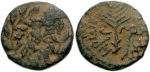
Judean king. He killed John the Baptist.

Leader of the Palestinian people after the separation of Palestine from Jordan following the 1968 Arab-Israeli War. Was he a freedom fighter, devoted to the independence and well-being of his people, or was he a terrorist, as many Israelis insisted? Did he seek peace, as suggested by his shared Nobel Peace Prize in 1994, or was this a tactical deception? When he eventually rejected Prime Minister Barak's and the Israeli Labor government's final peace proposal, was it because he feared assassination, as he allegedly told U.S. President Clinton, the broker of the talks, or because he truly believed the proposal inadequate?
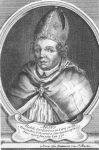
Theologian. He founded Arianism, the doctrine that Christ was of similar but not identical substance to God, and therefore subordinate. Arianism was sharply and successfully opposed as a form of polytheism by St. Athanasius and others at the Council of Nicaea, but remained influential for many years, especially in the Eastern Mediterranean. It still has an echo in contemporary Unitarianism.
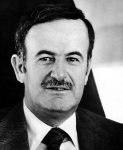
General and president. He was a member of the Ba'ath Party that ruled in Syria (and in Iraq until 2003) with a combination of romantic Arab nationalism and ruthless repression. Asad seized power in 1970 and within a few years became known throughout the world for his cruelty to opponents, but also for his shrewdness, cunning, and adaptability.
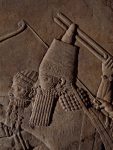
King of Assyria. The kings of Assyria were noted for their ruthlessness and cruelty, and several were assassinated. Assurbanipal, however, also promoted the arts and brought together texts for the first great ancient near-eastern library that we know of.
