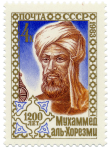
Mathematician. He may be considered the father of modern mathematics in addition to his many other studies. The word algebra derives from the title of one of his books.

Theologian. He helped preserve the work of Aristotle and other ancient thinkers and integrated their style of thought into Islamic theology.
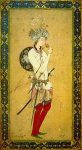
Caliph, fifth of the Abbasids. He presided over the Muslim caliphate at the peak of its powers, cultivated learning and the arts, but could also be a cruel and willful tyrant, as described in The Arabian Nights.

Astrologer, pre-scientist, student and lover of the stars.
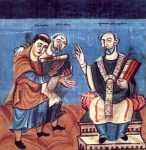
Thinker, writer, and poet. He helped make Charlemagne's court a center of thought and culture as well as of power.
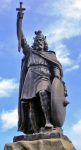
King of Wessex. He protected what later became Christian England, expressed an uncommon concern for the common people, personally translated books and nurtured learning.
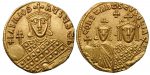
Byzantine emperor. He began life as a peasant horse-trainer, won favor with the dissolute Emperor Michael III because of his magical touch with horses, and insinuated himself into the court. There he gradually acquired enough power to murder Michael and proclaim himself Emperor, which he remained for nineteen turbulent years. His name became a byword for opportunism and treachery, but also for daring and strong military leadership.
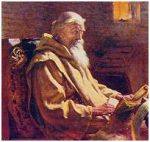
Priest, monk, author, and saint. He wrote in Latin on a multitude of subjects including sermons, saints' lives, Biblical commentaries, hymns, language, and natural history. His best-known work was The Historia Ecclesiastica Gentis Anglorum (Ecclesiastical History of the English People), which covers more than church history and is an invaluable source.
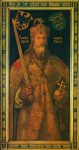
Emperor. He united much of Europe and promoted industry, learning, and the arts.

Theologian. He was a Christian Neoplatonist, a combination which brought his work condemnation by the Roman Catholic Church.
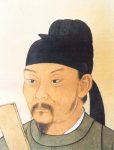
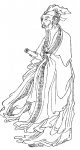
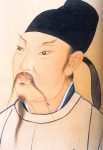
A Tang dynasty poet, and one of the first poets whose work was printed, he freely describes his own loves and dislikes, successes and failures. Like Epicurus, he favored pleasure and friendship over asceticism and solitude. In addition, he greatly appreciated beauty, whether in a splendid full moon appreciated with friends sharing a jug of wine, or the passing blossoms of spring. Like Montaigne, his is a voice from very long ago that always feels fresh and contemporary.
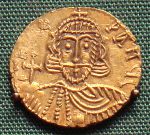
Emperor. He forbade religious images.
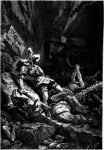
Knight. He was an exemplar of chivalry and devotion to duty.
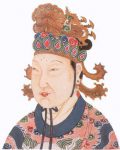
Empress. She ruled in her own name for a time.
