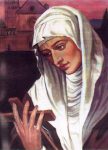
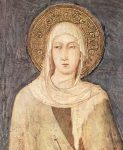
Christian Nun and Saint. She assisted her sister, St. Clare, in founding the order of Poor Clares, the female counterpart of St. Francis's order. Like St. Francis, she and her sister exemplified a simple, pure, uncompromising, and thus revolutionary, Christianity, an attempt to follow Jesus's teachings directly, to reject all forms of worldliness, to embrace the natural world, including animals and birds, to serve the poor and sick and anyone in need, and to live as much as possible as Jesus lived.
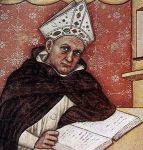
Christian thinker, teacher of St. Thomas Aquinas, and Saint. He helped reintroduce Aristotelian logic into Western theology and thought.
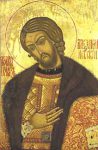
Prince. He exemplified the concept of Holy Russia, which combined Russian nationalism with Orthodox Christianity.
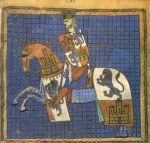
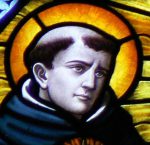
Scholastic theologian. His life and work expressed the value, not just of logic, especially Aristotelian logic, on the one side, and traditional Christian faith, revelation, and Church authority, on the other side, but of seeking to synthesize the two. He is particularly known for five logical proofs of the existence of God. His influence within the Church was so vast that the term Thomism (which was initially contrasted to the thought of Dun Scotus or Scotism) eventually came to refer either to Aquinas or to the general doctrines of the Roman Catholic Church.

Philosopher, polymath, and pre-scientist. He was an early critic of the inhibiting effect of authorities on thought, and an early exponent of empiricism, logic, the experimental method in science, along with the encouragement of technology and invention. Given these attitudes, his decision at age forty-one to join the Franciscan Order was a tragic error, since the Franciscans were even less receptive to his work than other orders might have been. He was silenced, then permitted by the Papacy to write specifically for the Pope, then imprisoned by the Order for fourteen years, after which he died.
Poet. He wrote poetry on religious themes.
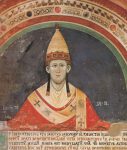
Traveler. A priest, Pope Innocent IV selected him to act as his ambassador to the Mongol Emperor. His journey to Mongolia took him over a year, and he provided the first European account of the Mongol court.
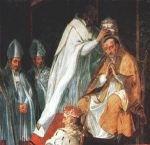
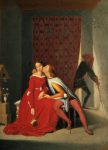
Tragic lover. She was forced to marry someone she did nt love and was then killed by him.
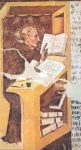
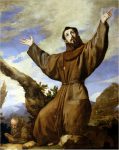
Religious leader. His story is one of the most important, and most moving, in the history of values. After a false start as a soldier, he preached and practiced a true imitation of Christ, eschewing all worldly possessions as part of a life of service to others, especially the poor, an idea which was revolutionary then and now. Just when things looked dark, however, his simplicity and sincerity persuaded the Pope that he was not a threat, and he was able to found the Franciscan Order of Monks.
He is also especially well known for his love of nature and of animals and birds.
Philosopher. He was an important thinker and logician, and contributed to the Nyaya and Vaisesika schools of Hindu thought.
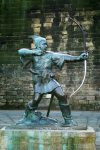
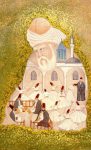
Poet. His poetry is considered a leading Sufi text, but is popular outside Islam as well. Some of his followers eventually became known as the Whirling Dervishes.
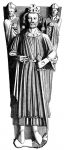
King. The brother of Richard the Lion-Hearted, his evil ways were chronicled in the Robin Hood tales, and eventually led to his forced signing of the Magna Carta, guaranteeing some rights.
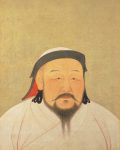
Emperor of China. He provided an example of high culture in a ruler and of religious tolerance.
